
Gum Disease Treatment

Gum disease is a threat to your oral health. Research is also pointing to possible health effects of periodontal diseases that go well beyond your mouth (more about this later). Whether it is stopped, slowed or gets worse depends a great deal on how well you care for your teeth and gums every day, from this point forward.
Care is better than cure, consult one of gum treatment specialist at Bright Smile Dental Clinic now and take care of your dental hygiene.
What causes Periodontal Disease?
Our mouths are full of bacteria. These bacteria, along with mucus and other particles, constantly form a sticky, colorless "plaque" on teeth. Brushing and flossing help get rid of plaque. Plaque that is not removed can harden and form bacteria-harboring "tartar" that brushing doesn't clean. Only a professional cleaning by a dentist or dental hygienist can remove tartar. Contact one of our dentist who are highly experinenced in the treatment of gums.
Gingivitis
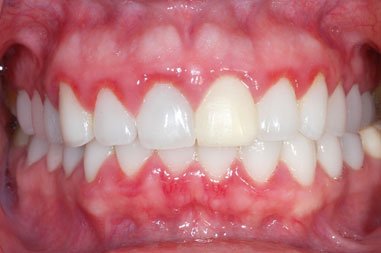
The longer plaque and tartar stays on the teeth, the more harmful they become. The bacteria cause inflammation of the gums that is called "gingivitis." In gingivitis, the gums become red, swollen and can bleed easily. Gingivitis is a mild form of gum disease that can usually be reversed with daily brushing and flossing, and regular cleaning by our dentist or dental hygienist. This form of gum disease does not include any loss of bone and tissue that hold teeth in place. Call us to discuss the procedures for gum disease treatment.
Periodontitis
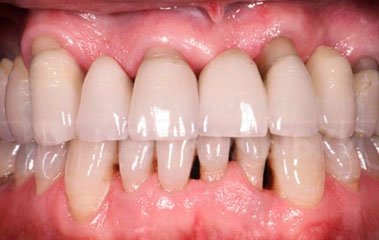
When gingivitis is not treated, it can advance to "periodontitis" (which means "inflammation around the tooth.") In periodontitis, gums pull away from the teeth and form "pockets" that are infected. The body's immune system fights the bacteria as the plaque spreads and grows below the gum line. Bacterial toxins and the body's enzymes fighting the infection actually start to break down the bone and connective tissue that hold teeth in place. If not treated, the bones, gums, and connective tissue that support the teeth are destroyed. The teeth may eventually become loose and have to be removed
Risk Factors
- Smoking. Need another reason to quit smoking? Smoking is one of the most significant risk factors associated with the development of periodontitis. Additionally, smoking can lower the chances of success of some treatments
- Hormonal changes in girls/women. These changes can make gums more sensitive and make it easier for gingivitis to develop
- Diabetes. People with diabetes are at higher risk for developing infections, including periodontal disease
- Stress. Research shows that stress can make it more difficult for our bodies to fight infection, including periodontal disease
- Medications. Some drugs, such as antidepressants and some heart medicines, can affect oral health because they lessen the flow of saliva. (Saliva has a protective effect on teeth and gums.)
- Illnesses. Diseases like cancer or AIDS and their treatments can also affect the health of gums
- Genetic susceptibility. Some people are more prone to severe periodontal disease than others
Who gets Periodontal Disease?
People usually don't show signs of gum disease until they are in their 30s or 40s. Men are more likely to have periodontal disease than women. Although teenagers rarely develop periodontitis, they can develop gingivitis, the milder form of gum disease. Most commonly, gum disease develops when plaque is allowed to build up along and under the gum line.
What can I do to Prevent Gum Disease?
Here are some things you can do to prevent periodontal diseases:
- Brush your teeth twice a day (with a fluoride toothpaste)
- Floss every day
- Visit the dentist routinely for a check-up and professional cleaning
- Eat a well-balanced diet
- Don't use tobacco products
How do I Know if I Have Periodontal Disease?
Symptoms are often not noticeable until the disease is advanced. They include:
- Bad breath that won't go away
- Red or swollen gums
- Tender or bleeding gums
- Painful chewing
- Loose teeth
- Sensitive teeth
Any of these symptoms may signal a serious problem, which should be checked by a dentist. At your dental visit: - The dentist will ask about your medical history to identify underlying conditions or risk factors (such as smoking) that may contribute to periodontal disease
- The dentist or hygienist will examine your gums and note any signs of inflammation
- The dentist or hygienist will use a tiny ruler called a 'probe' to check for periodontal pockets and to measure any pockets. In a healthy mouth, the depth of these pockets is usually between 1 and 3 millimeters
- The dentist or hygienist may take an X-ray to see whether there is any bone loss
Contact one of our dentist at Bright Smile Dental and Orthodontic Center in Jumierah on Al Wasl road for your gum treatment.

Our Gum Disease Treatment Services
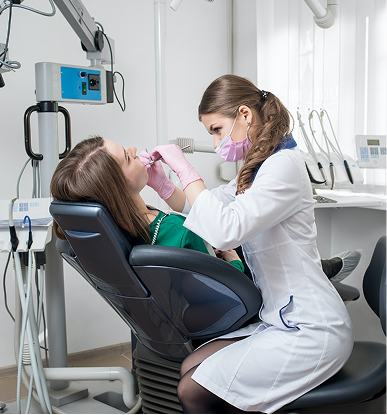

Periodontal Scaling and Polishing
Deep cleaning to remove plaque and tartar
Pocket Reduction Surgery
Periodontal intervention for gum pockets
Aesthetic Gum Correction
Cosmetic gum reshaping for better smile
Gum Depigmentation
Pigment removal for uniform gum color
Laser Assisted Periodontal Therapy
Advanced laser treatment for gum disease